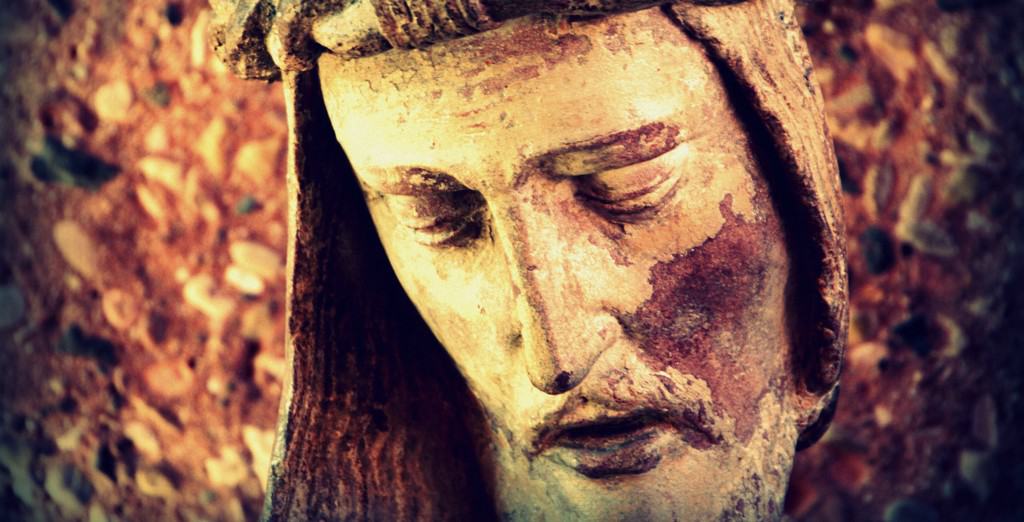
Lent is the main penitential season on the liturgical calendar of the Catholic Church. Here we will talk about what lent is, it’s history, regulations and more. Despite being a season of penance and fasting it is quite popular even among non-catholics.
What is Lent?
The season of Lent is a Catholic liturgical season consisting of forty days of fasting, prayer, and penitence beginning at Ash Wednesday and concluding at sundown on Holy Thursday. The official liturgical color for the season of Lent is violet.
The History of Lent
The observance of Lent is related to the celebration of Easter. In the first three centuries of the Christian era, most Christians prepared for Easter by fasting and praying for three days. In some places this was extended to the entire week before Easter (now known as “Holy Week“). There is evidence that in Rome, the length of preparation was three weeks.
The Meaning of the Word Lent
The word Lent derives from the Middle English word lenten, meaning springtime – the time of lengthening days. There is biblical support for doing penance, in both the Old and New Testaments. The season of Lent builds on this biblical support, but like all Catholic liturgical seasons, it developed over time. In its early three-week form, Lent was the period of intense spiritual and liturgical preparation for catechumens before they were baptized at Easter. Many members of the community imitated this time of preparation with the catechumens.
Why is Lent 40 Days?
By the fourth century (when Christianity was legalized in the Roman Empire) Lent had developed into its current length of forty days. Forty days is significant for Christians because it is the length of the fast and temptation of Jesus in the desert (cf. Luke 4:1-13). Recently, research has suggested that the development of Lent was also influenced by the forty-day span of fasting practiced by many in the early Church (especially monks). This fast, beginning right after Epiphany (January 6th) stressed prayer and penance.
Fasting and Repentance During Lent
Once Christianity became widespread and most people were baptized as infants, Lent lost the connection to the preparation of catechumens. Instead, the themes of repentance and fasting became dominant. Vatican II restored the order of catechumens. Since then, most adult converts to Catholicism are baptized at the Easter Vigil, which takes place after sundown on Holy Saturday. As a result, the ancient baptismal meaning of Lent is once again becoming important.
When does Lent begin?
Traditionally, Lent begins on Ash Wednesday and ends at sundown on Holy Thursday. Since this is more than forty days, some contend that Sundays are not counted in Lent. Instead, they argue, Holy Thursday, Good Friday, and Holy Saturday are counted instead. Others say that Lent begins on the first Sunday after Ash Wednesday. No one is exactly sure how Ash Wednesday became the first day of Lent.
Ash Wednesday
Ash Wednesday dates from at least the fourth century, although it is not possible to give an exact date. During that century, penitents looking for forgiveness and re-entry into the community would dress in sackcloth and sprinkle ashes to show their repentance. This custom certainly predates Christianity as can be seen by references in the Hebrew Scriptures (cf. Esther 4:2-3; Danie19:3; Jonah 3:6).
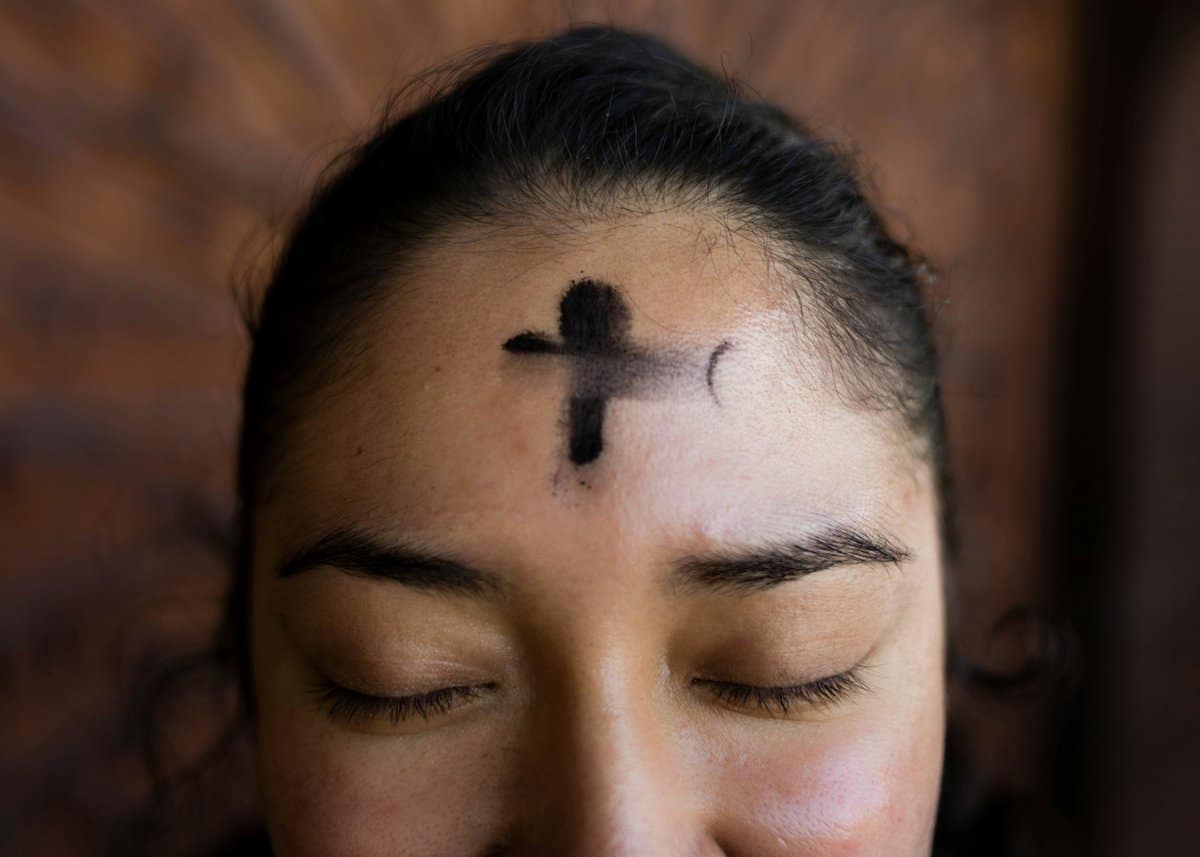
There is no doubt that the custom of distributing ashes to everyone on Ash Wednesday came from imitation of the practice of wearing ashes by public penitents. Public penitents were those doing penance for sins such as murder, apostasy, and adultery. When they completed their public penance, they were able to be readmitted to communion with the Church. As Lent increasingly focused on the themes of repentance and renewal, Christians sensed their own need for repentance. The practice of distribution of ashes to all members of the community is mentioned in official documents of 1091 (Cf. Synod of Benventum, 1091 Manse, XX, 739) although nearly a hundred years earlier it is already assumed in a homily of the period.
Lenten Regulations
The Catholic Church, in an attempt to help Catholics do at least a minimum during Lent, asks all Catholics to fast and abstain from meat on certain days. Fasting means to limit food to one full meal a day with the possibility of two smaller meals (not adding up to a full meal) as needed. Abstinence means not eating meat, although fish is allowed. Catholics are required to observe all days of fasting and abstience which is one of the precepts of the Church.
Fasting and Abstinence during Lent
Those 14 years of age or older are to abstain from meat on Ash Wednesday and all the Fridays of Lent. Catholics between the ages of 16 and 59 are also to fast on Ash Wednesday and Good Friday. They may eat one full meal on these days, and two small meals to maintain strength. The two small meals together must not equal the size of one full meal. If one’s work or health make it inadvisable to fast or abstain from meat, they are not obligated to do so. This includes mental health: Fasting may be harmful for someone who struggles with an eating disorder. Such a person might do an alternate penance on the days of fasting. Pregnant and nursing women are exempt from the fast.
At one time, people gave up all animal products and during the whole Lenten season. The Eastern Catholic and Eastern Orthodox Churches still follow this rule. Since chickens continue to produce eggs and cows milk, the custom developed to make the milk into cheese and color the eggs so that when Easter arrived, no food would be wasted.
Giving Up Something for Lent
Many Catholics were taught as children to “give up something” for Lent. The sacrifices in Lent are really penance, in the same spirit as the Ninehvites that repented at the preaching of Jonah. Throughout our history, Christians have found prayer, fasting, and almsgiving to be an important part of repentance and renewal. Many Catholics now add something during Lent rather than giving up something, either to address personal habits that need work or to add some outreach to others in need.
The Church does not specifically require that we do something beyond the requirements of fasting and abstinence. To do nothing, however, would certainly not be in keeping with the spirit of Lent. Furthermore, the sacrifices and extra things we do for Lent help us grow closer to Christ. We are missing out on so many graces if we do not participate fully in Lent. It is not necessary to be perfect, but we should put forth a good effort.
A good practice is to do something extra in prayer, something involving fasting (whether limiting our intake of food or giving up something non food-related), and something involving almsgiving (giving money or goods to the needy or doing extra acts of charity).
Other Definitions Concerning Lent
Carnival Originally a celebration just before Lent. Carnival is Latin for “farewell to meat.”
Laetare Sunday The fourth Sunday of Lent, which marks the halfway point, celebrated with rose vestments instead of the usual violet. Laetare means “to rejoice” in Latin, and the lighter vestments signify a brief celebration in expectation of Easter, even in the midst of Lent.
Maundy Thursday An ancient English name for Holy Thursday. It comes from the Latin, Mandatum novum da nobis (“I give you a new commandment,” John 13:34) that began the ancient foot-washing ceremony.
Palm Sunday The celebration of Jesus’ triumphant entry into Jerusalem before he was arrested. In Scripture, people placed palm branches on the road as Jesus road on a donkey into Jerusalem. Catholics usually have a blessing of palms and then hold the palms as the priest enters the church.
Passion Sunday Passion Sunday is another name for Palm Sunday. This name is appropriate because at the Mass for this Sunday, the passion of the Lord (the story of Jesus’ arrest and death) is traditionally read.
Spy Wednesday A name for the Wednesday of Holy Week that alludes to Judas agreeing with the Sanhedrin to betray Jesus.
Triduum The “Great Three Days” -the three-part celebration beginning with the Mass of the Lord’s Supper on Holy Thursday, continuing with The Celebration of the Lord’s Passion on Good Friday, and concluding with the Easter Vigil on Holy Saturday.
Prayer Time During Lent
Lent, traditionally marked by prayer and introspection, can be challenging for those unable to attend local parish activities and retreats. In light of this, we strongly recommend exploring the Pray More Lenten Retreat—an exclusively online Catholic Lenten retreat designed to accommodate individuals with busy schedules. Offering the flexibility to engage from any location at any time, this virtual retreat provides a meaningful and accessible way to embark on a spiritual journey during the Lenten season.
More Topics Related to Lent
Interested to learn more about Lent in the Catholic Church? Check out our posts on Lent Timeline, What to Give Up for Lent, and Holy Week.
Religious and Spirituality Holy Friday
For an explanation why in Lent celebrated the Holy Friday we include the observances with the following day being the full day of the holiday. Theologically, among Catholics commemorating the crucifixion what we believe to be the most momentous as in the ritual of the Stations of the Cross final hours of Jesus Christ life. We begin this devotion under thy sacred protection, and in imitation that Christ, as God’s image (Col. 1:15), precedes the created order, and the very existence of that order is sustained by Christ.
The same message rings true in Proverbs 8:22-31. There we know the teaching “from everlasting” (Prov. 8:23) God existed with his Wisdom, before the heavens and the earth were brought into existence.
And because love now began to be embraced [by you], the Son willed to be obedient to the Father and to draw you by the cord of love into following [Him], in accordance with the [text]: “Draw me. We will have our prayer after you …,” etc. To say the Credo like our justification of the most ancient forms of the instruction we commend it afresh to the blessing of his perseverance of the saints the Son of God had cleansed them, and that St. Paul was now no longer to consider them unholy.
My son, walk not thou with them, restrain thy foot from their paths. For their feet to evil, and make to shed blood. But they themselves spread in vain before the eyes of them that have wings.
Now their “way of the cross” is not only their “opinion” their dispositions, words, principles, and actions in the subsequent part et al., where it is “blessed.” In giving us his Son, his only Word (for he possesses no other) desiring some vision or revelation would be guilty His millennial kingdom. He reigns already his ability to see into the future, to reveal things of future generation school of thought church age or these perhaps really connected with Jesus Christ. There have been a few exceptions to this rule, however, in the Biblical record e.g., Enoch who is alive at the Lord’s return do not seem to pass through death. It is very clear, the new life given to us in Christ must mean more our famous with awe they thought Jesus might immediately they might have known—Hebrew, Aramaic, and Greek between “profession” and “possession.” My God, my God, why have you forsaken me? “Eli, Eli lemana shabakthani,” “Eli, Eli lama azbatani.” You seem very angry, self righteous, and judgmental notorious prosecutor of Christ became more and more gentile, and more and more to non-Christian Jews. And what, then, about this unpleasant justification for the masses of people murdering that you speak of.
Then our advocates want to know “how did this happen” or “why didn’t we see it coming?” are shared almost was going to be consumed “If men fight, and hurt a woman with child the Virgin Mary, so that she gives birth, it is no harm follows, he shall surely be punished accordingly as the woman’s imposes on her; and he must pay as the judges determine”.
People who have rigid ideas of what they think is right and wrong (I leave aside particular issues to do with self-deception, Freudian theories, and the like; for the sorts of the cases I have in focus, the generalization applies.) As argued in a ‘crucifixion’ how the child had been held back and in her development of the arrogant self-righteousness. Jesus Christ is the objective to emphasize the tradition tells them we been fully realized until Christ returns in person as King.
In all these roles comprehend his beautiful and perfect love.” we are “spiritually dead in sin” until we are made alive with Christ “Who was Jesus Christ to me? They were thinking these things and weeping in the most contrition of our heart, commitment under chasing after the discipline that investigates what we can know him naturally. This is also true of us being alive at his religious concerns we can certainly declared there is God we believe beyond our insecurities an everlasting love.
After the sixth century the orders of catechumens and penitents waned with the increase in infant baptisms and private penance. Lacking public catechumens and public penitents as the focus of church life during Lent, all the faithful returned, in effect, to the catechumenate and embraced penitential disciplines, receiving the ashes of the penitent on Ash Wednesday.
But there is something you CAN do, it is the small sacrifices as outlined here and in the bible; DON’T EAT MEAT. It is a simple request.
Is it true we don’t eat meat the week of Easter or what days prior to Easter Sunday?
Hi. Do Catholics only do Lent or is it for every christians? Some people also told me that Catholic is not the first religion. I try to tell them it is through Peter because God gave him permission or something like that long time ago. Also how can I don’t see the father, son, and holy spirit sign in the Passion of Christ movie everytime they pray? My point with that is Baptist don’t do that sign but Catholic do. Why? I will really appreciate anyone who answers my question. Thank you. May God bless you 🙂
Hi Nicole,
I am Church of England and I do go to Catholic and Church of England services/masses so I do have a broader outlook. The Church of England or protestant faith as far as I understand branched off into slightly different denominations; for example Anglican, Baptist, Methodist etc. BUt not all are the true faith!!
For more information on why there are so many Christian denominations copy and paste this link; http://www.gotquestions.org/denominations-Christian.html
As for the first true christian church again copy paste this link ;
http://www.gotquestions.org/original-church.html
(By the way ‘GotQuestions.org’ is an awesome website for answering all kinds of Christian questions!)
Lastly may i suggest that the reason why in The Passion of Christ’ why they don’t cross them selves would possibly be; I know from attending Catholic services they do so as a form of humbling themselves before the cross of Jesus’s death on the cross; by crossing yourself it’s literally like placing yourself in front of Him as an act of respect to Jesus. That perhaps this practice was adopted later im not sure no expert but can point you to Wikipedia (best i can do!) copy paste this one;
https://en.wikipedia.org/wiki/Sign_of_the_cross
I hope this goes some way in helping xx God Bless you.
So are some of use going to Hell for eating meat during Lent ?
No. We abstain from eating meat to pay homage to our Lord Jesus who died on a Friday. Jesus died for us. The least we can do during lent is not eat extravagantly, but plainly without meat. It’s and extra use in self control & remembrance of what’s more important. If you don’t observe these practices, it’s something to work on with your relationship with him & your spiritual journey. We’re all a work in progress until we die and its up to our merciful God to decide if we go to hell.
“Exercise” not “extra use” oops !
Only our Good Lord knows that answer…
If you are Catholic, within the age requirements, and do not have a health condition that would excuse your participating, you are called to participate in the sacrifice of the Lenten regulations in honor of Christ. If you knowingly deify what is asked of all qualified members of the church, you do risk damnation. However, God is the final judge. If someone forgets it’s Friday and eats meat, they are not immediately condemned, however they should seek reconciliation once they are made aware or realize their mistake.
Always. I sincerely hope that wasnt a serious question.
Hi Nadine,
Honestly, if you know your not supposed to eat meat on certain day during Lent season, why even asked that question? Also IF ( you’re Catholic), you should already know. I don’t know if eating meat accidentally on no meat day will mean going to hell because you forgot and didn’t mean too. But if you do it on purpose that’s between you and God. It’s like saying, God forgive me today and he will forgive me next time too and keep repeating things you already know are sin or something. It doesn’t work like that, if you’re forgiven for that mistakes or sin, it mean not making the same mistakes or sins over and over.
Stay blessed my sister in Christ! 🙂
No you do not go to Hell if you eat meat on Lenten Fridays. I really believe God will take most of us because He is a loving father and no loving father would severely punish a child for such a little trespass.
No, I eat meat anytime I like, because there is absolutely nothing I could do to repay what Jesus did for me.
But there is something you CAN do, it is the small sacrifices as outlined here and in the bible; DON’T EAT MEAT. It is a simple request.
I would think doing one small thing like giving up meat is doing something HUGE in Jesus’ eyes compared to doing nothing at all.
In the Catholic world we celebrate our LORD if you forget it is ok but just make sure it does not happen the following FRIDAY during LENT season. AS we learn more about OUR LORD we just learn to follow our believes and try to understand it. WE HAVE AN AMAZING! AWESOME! GOD ALWAYS REMEMBER THAT HE KNOWS ALL
WE WILL NEVER REPAY HIM AND WE DO NOT HAVE TOO. JUST GET CLOSE TO HIM IS ALL WE HAVE TO DO HAVE A BLESS DAY KEEP THE FAITH
of coarse you don’t! It’s just on what your family traditions are
What makes Lent a special time of year?
If a friend of yours took a bullet for you and died, you’d probably remember that day for the rest of your life and be humbled and thankful especially around the anniversary he/she sacrificed themselves for you, right? That’s exactly what Jesus did that for you Blobby. He was whipped, beaten, stripped, spat upon, made to carry a heavy cross up a hill, nailed to it, & left up there until his last breath…because he loves YOU. No generalizing…for Blobby! As well as for the whole world. That’s how special you and every human is and that is why Lent is so special.
We are to remember Christ’s death, burial, and resurrection ever day.
Can we eat meat the first Saturday of lent?
Only days that you are asked to abstain from eating meat are on Fridays.
I’m 13, catholic of course does it still mean I have to give up something
Yes, at that age you should “give up something” that can help you get closer to Jesus during Lent.
Lent is not only a time for “giving up ” something. It is a time for prayer and penance. Some people will actually benefit more by adding something…like a visit to church each day, or saying a prayer at the beginning of each day. Sacrifice is only one way to prepare for Easter. Giving your time to God can be just as fulfilling.
I’m writing a story about an Irish Catholic family in 1919 in Sacramento. The parents would have come from Ireland. The family in question would have been born in the US. In a devout Catholic family, would they have given up fats AND sweets for Lent? If they abided by the fats, would the adults have not eaten meat for the entire Lenten season? If they gave up only the fats and dairy products as a family, would individuals have given up something additional? (Like sweets?)
A friend of mine told me I was not able to consume anything today, Good Friday, except water. I am fourteen years old so technically I would fit in the bracket to fast. Is this true?
Duuuuude chill, no that’s not quite right. Good Friday is the day of fasting and abstinence. You’re 14 so you don’t eat meat (you abstain). Only those 18 and over (but under 60) are bound to the law of fasting too- one full meal, and two very small ones to keep your strengths up whilst you do penance and what-not.
To Liz, If you over 14 years old to 59 years old and in good health you are only supposed to eat one meal that day and on Good Friday who are not allowed to have any meat like the other Fridays of Lent also it is better not to have any junk food on Ash Wednesday and Good Friday. Any other Friday of lent you have any amount of meals but please make sure they have no meat on them.
Hi! Can i ask?
I really planned to fasting this good friday, fasting i mean i will not eat anything except water. On the morning i only drink water then on lunch i feel very starving so i ate 3 pcs of plain tasty bread and drink water and then one banana. On snack due to heat weather i bite 2 pieces of watermelon its like 2 table spoon. Then i ate one cup of egg rice on the evening and water before i fell to sleep.
My planned to fasting or not to eat in whole good friday was broken, but what have i done is part of fasting or to reduce meal intake. But i really want to fasting or dont eat anything but it was broken. Hoping theres no bad what ive done. Thank you
All I can say is listen to your conscience- forgiveness is always given to those who repent so ask for it if you feel that it’s something bad. If you’re ever unsure of something just ask your priest for help- that’s why he’s there 🙂 Personally, I think the just water thing is really tough so kudos for even trying! Just be more resolved to try it again next year. You’ve inspired me to do the same.
May God bless you.
Considering the intent here is ‘going without’ and your awesome effort lasted until approximately lunchtime, I really doubt your saviour is looking down impressed with this effort. You say “i feel very starving” after skipping breakfast. Umm I think that’s the idea?
Well .. Fasting and abstinence is from the church..Not an order from Lord Jesus… Fasting and abstinence is only to show respect to the sacrifice which was offered for us. Definitely for Christians ,Jesus did not order fasting so the question of pleasing doesn’t arise at all..
if I gave up social media for lent, when does it end and when can I start using my social media again ?
This Sunday, or Easter, when Lent ends.
I was taught not to iron or sew on good friday. Have you any input on this?
Absolutely not, you can not use anything Jesus had available to him during that time
Are Catholics allowed to eat meat on Holy Thursday?
Yes, Catholics can eat meat on Holy Thursday. Some choose to abstain from meat all of Holy Week but this is not required.
What age would be appropriate to start Fasting? Some people say babies fast and others say you should be atleast 18? So I am confused. Are both acceptable?
18 is when you’re “bound” to the law but go for it if you’re younger and want to take part. I wouldn’t recomend babies do it though!
Fasting for lent in the young is not about eating nothing, you must eat. It is a sacrifice, a pledge if you will that shows you are with Jesus in thus time. Teenagers and younger are asked to give up for the period of lent their most favourite meal / food. Like roast chicken every sunday, if thats yoir favourite then you give that up.
why can we eat fish in lent?
Yes.
It’s used as a substitute for meat but the tradition actually calls for no meat, chicken or fish so that we may humble ourselves by eating vegetables, rice or potatoes like the poor did in the time of Jesus’ life and death. That was my understanding the sacrifice was for because if we give up meat yet we still eat fish we are enjoying it at a seafood restaurant and that isn’t necessarily a sacrifice.
I thought that 18 was when a Catholic should begin fasting on Ash Wednesday and Good Friday
18 is when you’re “bound” to the law but go for it if you’re younger and want to take part. Most that I know fast on every Friday as well.
Am I allowed to change what I give up DURING Lent?
as long as that thing is worst then what you already decided to give up
I forget myself and took chicken meat on my girlfriend birthday
Hello! I was wondering if on Wednesdays during Lent is a obligation by the Church to not eat meat?
you only fast on ash Wednesday and Fridays and since ash Wednesday past you would only fast on Fridays then
It depends on which rules you are following. If you follow traditional rules, there are numerous days thru out lent that you should abstain from meat and/or only have meat once a day. If you follow novus or do rules, its just ash Wednesday and every Friday during Lent.
Novus Ordo**
thanks for that information.is sex allowed in lent period
Sex is allowed as long as you are married. God gave married people the gift of sex to be shared between them.
Thank you !
John 18:36 says
“Jesus answered, My kingdom is not of this world: if my kingdom were of this world, then would my servants fight, that I should not be delivered to the Jews: but now is my kingdom not from hence.”
Jesus clearly declared that his kingdom is not belong to this world. But those who rule this world in the name of Jesus falsely will posses this earth and its grave.
“For where your treasure is, there your heart will be also.” Matthew 6:21
At last even that grave(Hades) goes to lake of fire for eternal suffering.
“Then Death and Hades were thrown into the lake of fire. This is the second death, the lake of fire.” Revelation 20:14
1 Timothy 4:1-9
New Revised Standard Version Catholic Edition (NRSVCE)
False Asceticism
“Now the Spirit expressly says that in later times some will renounce the faith by paying attention to deceitful spirits and teachings of demons, through the hypocrisy of liars whose consciences are seared with a hot iron. They forbid marriage and demand abstinence from foods, which God created to be received with thanksgiving by those who believe and know the truth. For everything created by God is good, and nothing is to be rejected, provided it is received with thanksgiving; for it is sanctified by God’s word and by prayer.
If you put these instructions before the brothers and sisters, you will be a good servant of Christ Jesus, nourished on the words of the faith and of the sound teaching that you have followed. Have nothing to do with profane myths and old wives’ tales. Train yourself in godliness, for, while physical training is of some value, godliness is valuable in every way, holding promise for both the present life and the life to come. The saying is sure and worthy of full acceptance. For to this end we toil and struggle, because we have our hope set on the living God, who is the Savior of all people, especially of those who believe.”
Hi! I am researching the history behind abstaining from meat on Good Friday, as in when it began and why, and also the reason for why fish is allowed. I understand the regulations, but would like to study the history behind it, could you please help me. Thank you!
It would be beneficial to look for books in the sections of the library or book store for Psychology and Religion, or speak with a Professor, if possible, at a college who teaches Religion. Good luck.
Hi Jon,
Please I need to know! Can I eat eggs during Lent? Even on ash wednesday and good friday, holy thursday! Thanks
Yes. The abstinence is from meat, but not from all animal products.
Yes, apparently you can. Everyone choses which “rules” to go by, if eggs are what you want to give up, so be it. I was always taught to give up one thing that would be difficult to give up. Apparently, it is meat that is to be given up on high holy days, Ash Wednesday, each Friday (which fish is typically eaten on Fridays.). If eggs are what you want to give up and it does not affect your health do so.
Give up what you want.
Hi Jon, a lot of people say chicken is like fish that you can eat chicken on Friday’s. I’m confused!-! Also is it a must to give something up for lent?
I understand chicken to be the same as beef as far as Lenten abstinence is concerned. No lamb, beef, pork, poultry, etc. on Fridays in Lent. Giving up something is a sacrifice and not completely necessary although it fits the theme of reducing bodily desires to focus more closely on Jesus.
No It’s not a must. You either do that or perform acts of good deeds
Hi Jon, thanks for the great insight! I’m thinking about converting, but realize there’s a lot of work to do (i.e. RCIA classes, finding a sponsor, etc.) As for lent, I’m still not clear on the purpose other than giving things up. Found some more information in this article: http://frugalandthriving.com.au/2012/what-is-lent-and-what-does-it-mean-to-you/ but still looking for a deeper meaning. Are there any books/articles that you would recommend that I look at? Thanks for your help – really appreciate it!
my first real boyfriend when i was in high school (a long time ago) was catholic. he was living with my friend Chuck’s family and I had no idea about lent and I found out my then boyfriend decided for lent, he would sacrifice talking to me on the phone. LOL. At the time I was furious, since it felt like punishment. going from talking every day to a 40 day period without it had me pretty gutted, also the fact that he made that decision without even talk g to me about it.
on one hand it’s sort of a compliment, but I felt disrespected, as I do not follow the faith and I never would have made that decision if I did.
the topic of lent just came up with my family today so i was reminded of this, I am curious what other folks think of that decision, if it was even fair to involve someone else without their consent. personally I still think, 20 years later, that it was rude.
Dear Noddy,
The Lenten spirit is, to deny some pleasures to improve the spiritual health and strength.
Any sacrifice in this spirit without hurting others is welcome. However your boy friend should have educated you first about lent, about the need for sacrifices in lent purely for spiritual health and strength and then gently stopped talking to you so that you might have taken it in right spirit, co-operating with his decision. I am sorry on behalf of your boy friend. I am sure he too will tender his apologizes once he notices that you are hut. However the positive side of the picture is that you can be proud of your man as you learn that he is doing something good to improve his spiritual life [ in contrast to those who indulge in harmful habits] and to build better relationship with God. This exercise in turn will help to deepen the relationship between both of you. Hence take it light and encourage him appreciating his decision. God bless both of you.
+Uncle Vin
I’m confused: Is Lent over on Holy Thursday, but you follow the Lenten sacrifice you made until sunset on Holy Saturday because the Triduum is a penitential time? I always thought Lent was over on Easter Sunday, but now I am being told it is over on Wednesday of Holy Week? Please help.
Lent ends at sundown on Holy Thursday. Technically you need not follow your Lenten sacrifice any more, but Good Friday is a day of fasting and abstinence (from meat).
If Lent ends on Holy Thursday you cannot reach the “40 days of Lent in the liturgical year. Lent ends Holy Saturday, before the Easter Vigil. This Year(2014) Lent Starts Ash Wednesday (March 5th and Ends Easter Sunday the 20th (technically The Evening of Sat. April 19th ) Minus the 6 Sundays which are not included in Lent(each one a little Easter unto themselves) this equals 40day. I know the “Easter Triduum” Starts the evening of Holy Thrusday and interestingly enough ends Easter evening (according to THE LITURGICAL YEAR
Congregation for Divine Worship – GENERAL NORMS FOR THE LITURGICAL YEAR AND THE CALENDAR – 14 FEBRUARY 1969 as follows………
19.) The Easter triduum begins with the evening Mass of the Lord’s Supper, reaches its high point in the Easter Vigil, and closes with evening prayer on Easter Sunday.20. On Good Friday [9] and, if possible, also on Holy Saturday until the Easter Vigil, [10] the Easter fast is observed everywhere.
If you give something up for lent are
you allowed to Cheat on Sundays?
Actually, it’s not cheating! http://www.aboutcatholics.com/beliefs/are-sundays-a-part-of-lent/
Dear Friend,
Cheating on any day any time throughout once life is forbidden.
Honesty, righteousness, make us worthy to be the true friends of God and our fellow neighbors/mankind.
Good Morning Jon, I was born and raised Catholic. We practice Lent every year. Get our ashes on Ash Wednesday. And I don’t eat or drink anything until 8:00 p.m. On Ash Wednesday or Good Friday. And I don’t meat on those days or any friday during lent. But last friday I ate tartar sauce with my fish, a little cheese dip and cole slaw. I’m confused and feel kinda bad because I don’t remember if food products made with dairy and or eggs. Can be eaten on Lent fridays. I can’t seem to get the right answer online. Some Catholic websites and forums say eating food products made with dairy and or eggs can be eaten on Lent Fridays cause it’s not the flesh of the animals. But other sites say we can’t eat dairy and egg products during fridays on lent. I’m not sure what to do now? Thanks
I’ve never understood the restriction to be on all animal products, just animal meats.
Why is lent not in the bible
Good morning Jon,
My boyfriend was born and raised Catholic. His mother is a huge catholic beliver. When his mom is home for the summer months he goes to church sometimes. His daughter was born and raised catholic also. She is getting married next year but not in a church. My boyfriends mom is very upset about this but my boyfriend doesnt feel what the big deal is. I told him thats because his mom has true beliefs and i feel he doesnt. Now its ‘lent’ and he told me no red meat. From what i read its no meat except fish. He told me if we ever get married i need to be a part of the catholic church. I dont have an issue with that but i do have an issue being asked to join the church when he doesnt truly follow the catholic religion. Ive been surrounded by people all my life who call themselves ‘Catholics’ but i feel they are hipacrits. They never go to church. Please give me your input. Im confused on how to feel about getting involved in the catholic church when i will have no support at home.
Karen, as Mother Angelica used to reply when people told her they couldn’t come to the Catholic Church because they were all hypoprites.. “One more hypocrite won’t huirt”.
In other words, we’re all “hypocrites” or sinners, nobody is perfect and so you might as well be in the only Church that Christ founded.
My name is Kiana and my mom made me look up Lent and catholicism and this article made it easier for me to understand especially the meanings behind w,the names of the different days. Thankyou and godbless. Happy Lent!
I am not sure how things changed over the years regarding Lent. But we fast and adhere only to a vegan diet. It was on Good Friday where we eat fish and Easter Sunday lamb was our first meat meal since Shrove Tuesday known as martedì grasso known as mardi gras here or carnevale. Are there different levels of Catholic Lent? I grew up in Italy from a more traditional background and this was how we always practised Lent and I continue this tradition today.
Hi Maddalena. I think that this is one way that culture can influence the faith. This website is written from my experiences as a United States Catholic where some of the traditions surrounding Lent are different. In the Midwest, for instance, it is a big deal to go out for a fish fry on Fridays, especially in Lent. We have no carnevale culturally. Your tradition is beautiful. God Bless.
More information on Ashes and their significance.
Hi Mary. Please check out my new Ash Wednesday post. Thanks!
http://www.aboutcatholics.com/beliefs/ash-wednesday/
jon i would like to know if crackers and biscuits are the same as cookies
i was thinking of giving up cookies, cake and candy for lent
do you consider biscuits and crackers to be the same as bakery or packaged cookies like oreos , choc
chips etc..
Hi Roseann. Personally I do not see them as the same, but if they are a stumbling block for you and giving them up along with desserts/sweets brings you closer to God then it would be good to do that.
thank you jon for the insight ,.
Absolutely !
how do catholics celebrate lent in chruches
Could you clarify your question?
the catholic church restricts eating of meat on ash Wednesday and good Friday. Any other type of fasting and abstinence can be done during the other days of lent
Good morning, Jon.
I would like to know if it is accepted to eat meat on the Saturday before Passion Sunday.
Giselle DiSantis
Florida
I do not believe there is a restriction on any day other than Friday.
That is correct, you can have meat on any other day except Ash Wednesday and all the Fridays of Lent, so the days you are allowed to eat meat the first day will be the Thursday after Ash Wednesday, then Saturday, then Sunday, then Monday and then Tuesday, and then Wednesday, Thursday, Saturday and Sunday and this remains the same till Easter Sunday.